How to increase e-commerce conversions without increasing traffic investment?
The data indicated that Sonco's search performance was significantly below the market average, resulting in an unsatisfactory experience for users, with 8% of searches returning "no results." I reviewed the site's search functionality and approved an investment of over $12K for this project, which, according to the company itself, had an estimated ROI of 4x, considering a conservative expectation.
Achievements
+4x ROI
(Business estimation)
12K
In investment to implement the tool
Company
SONCO is a US-based company that specializes in perimeter protection and safety barriers for construction sites, serving contractors and construction companies through their B2B e-commerce platform.
My Role
Staff Product Designer
Timeline
4 months
Year
2025
Scope
Research, Wireframes, UI Design
To increase website conversions, I analyzed the beginning of the user purchase journey and found that 16% of them started their product searches in the search bar, while on mobile, this number reached 32%.
Upon evaluating the search performance, I discovered that 8% of the results yielded "no results," which was already concerning, but it became even worse because the "no results" page did not provide an option to return to navigation, leaving the user in a dead end.I conducted a benchmark with over 20 e-commerce sites, from the most similar to the most distinct, to identify similarities and opportunities for the project.
This research revealed that there are features that are recognized conventions by users, such as:
• exact match search
• automatic suggestions
• support for specific queries
• support for symbols and synonyms
• support for queries unrelated to products
• support for subjective queries
The performance was unsatisfactory, the results were poor, and we were missing revenue opportunities.
Based on the sessions, conversion rate, and market benchmark, we concluded that if we could reduce the "no results" rate from 8% to 2% or less, we could achieve an exponential increase in conversions, offering an ROI of up to 4x.
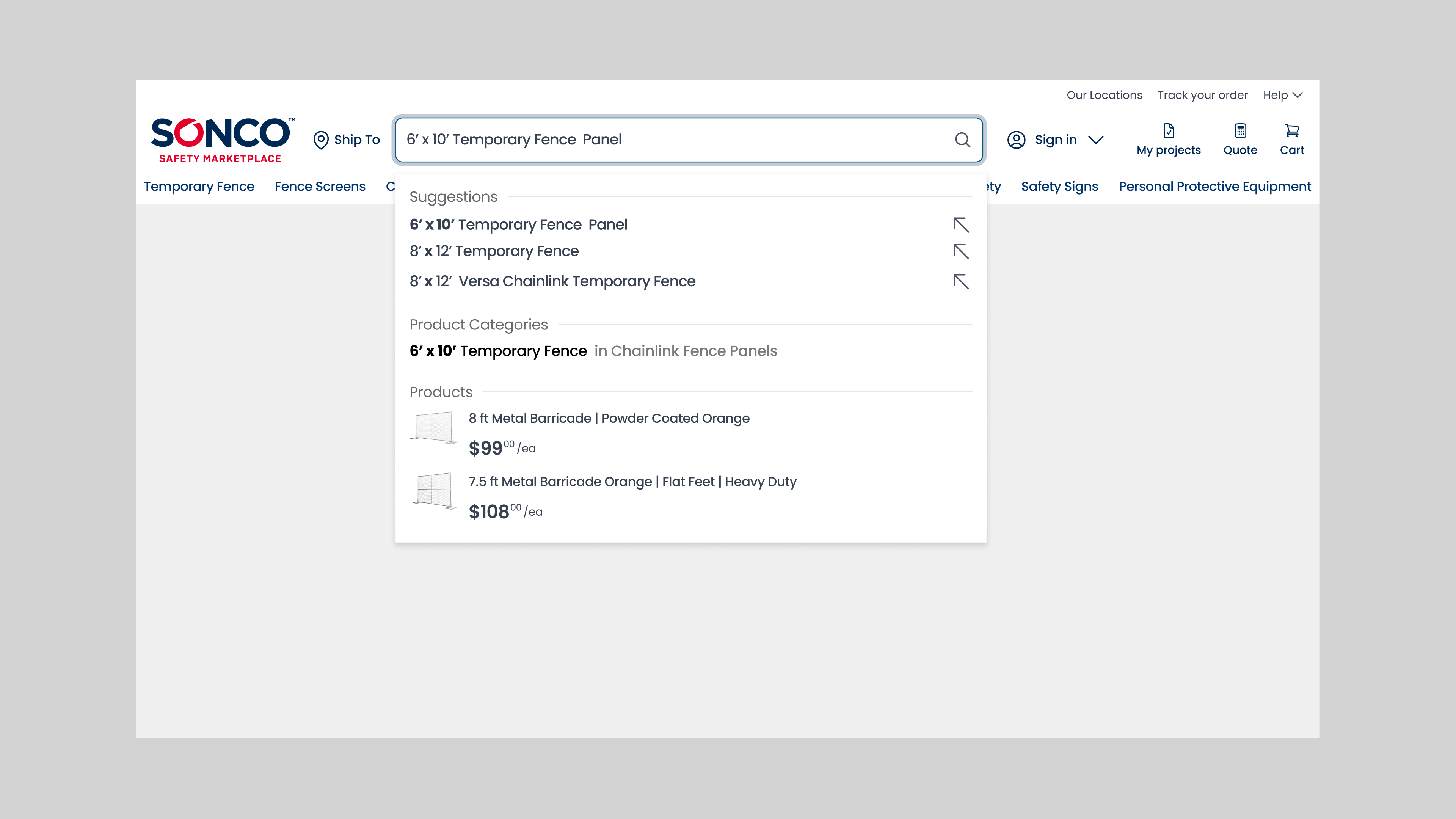
After presenting this data to the business team, the project gained priority and received an investment of $12K to acquire an external tool, as developing a solution from scratch would take much longer.I had the freedom to conduct benchmarks and negotiate with various suppliers, and we chose Algolia, a major player that offers support for all the features I deemed essential for the site.Unfortunately, my involvement ended after we signed the contract with Algolia, leaving only the installation and configuration time by the developers, as well as adapting Algolia's front-end to our needs, as I had planned.
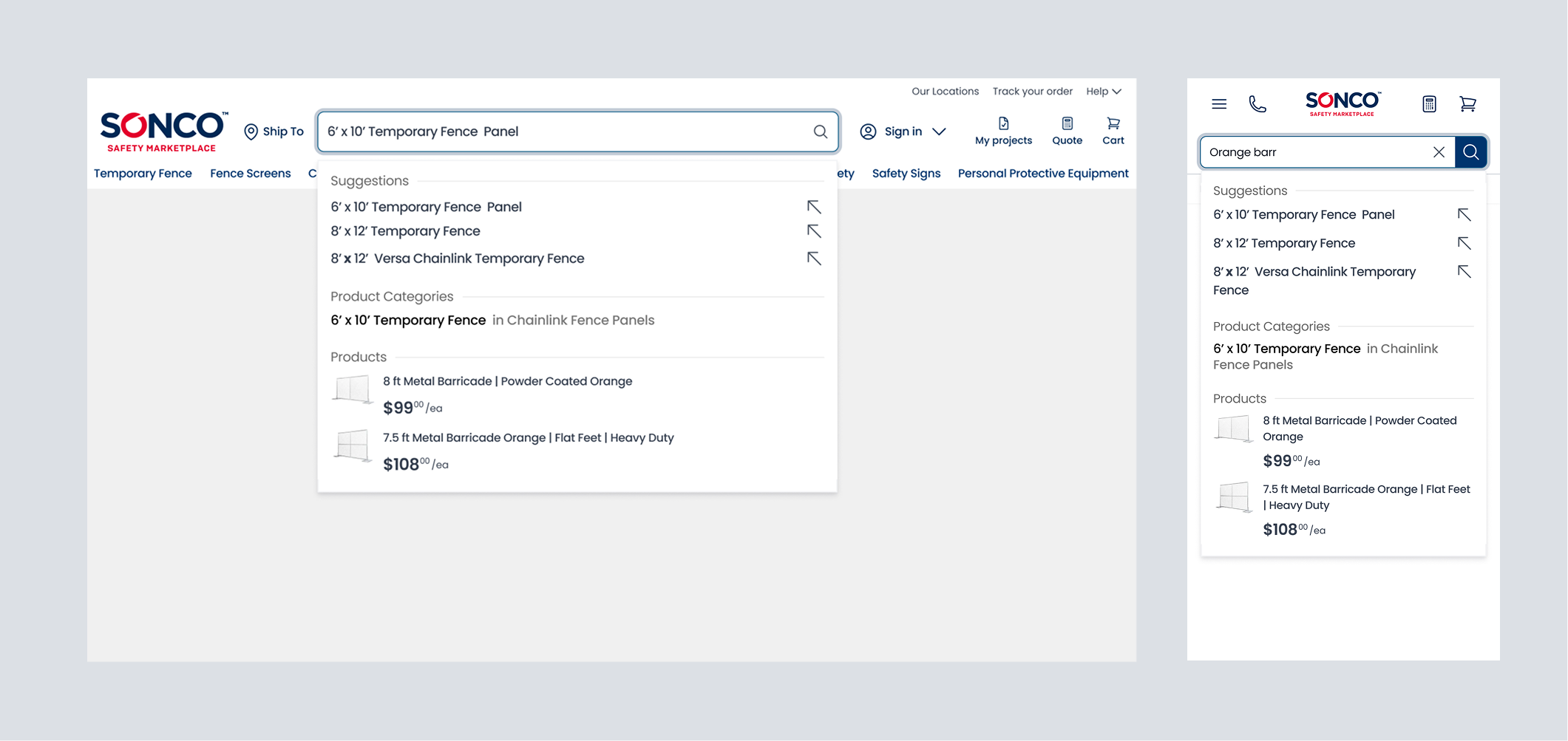
Before hiring the search software we were going to use, I listed all the features we needed and prioritized them with the tech lead to understand which ones would be quick to develop and impactful for the business. We were able to develop some without having Algolia yet. Pages like No Results gained options for contacting sales, query verification, and now the user's query persisted in the search bar, allowing the user to check their query in case of no results or unexpected results.

For the results, I prioritized highlighting search suggestions to provide more options for the customer. Additionally,
I demonstrated the expected outcome when the user performs a feature search, illustrating it here with the product color, so that the search prioritizes based on the user's query, which had not been the case until now.