Sonco Safety Marketplace
Challenge
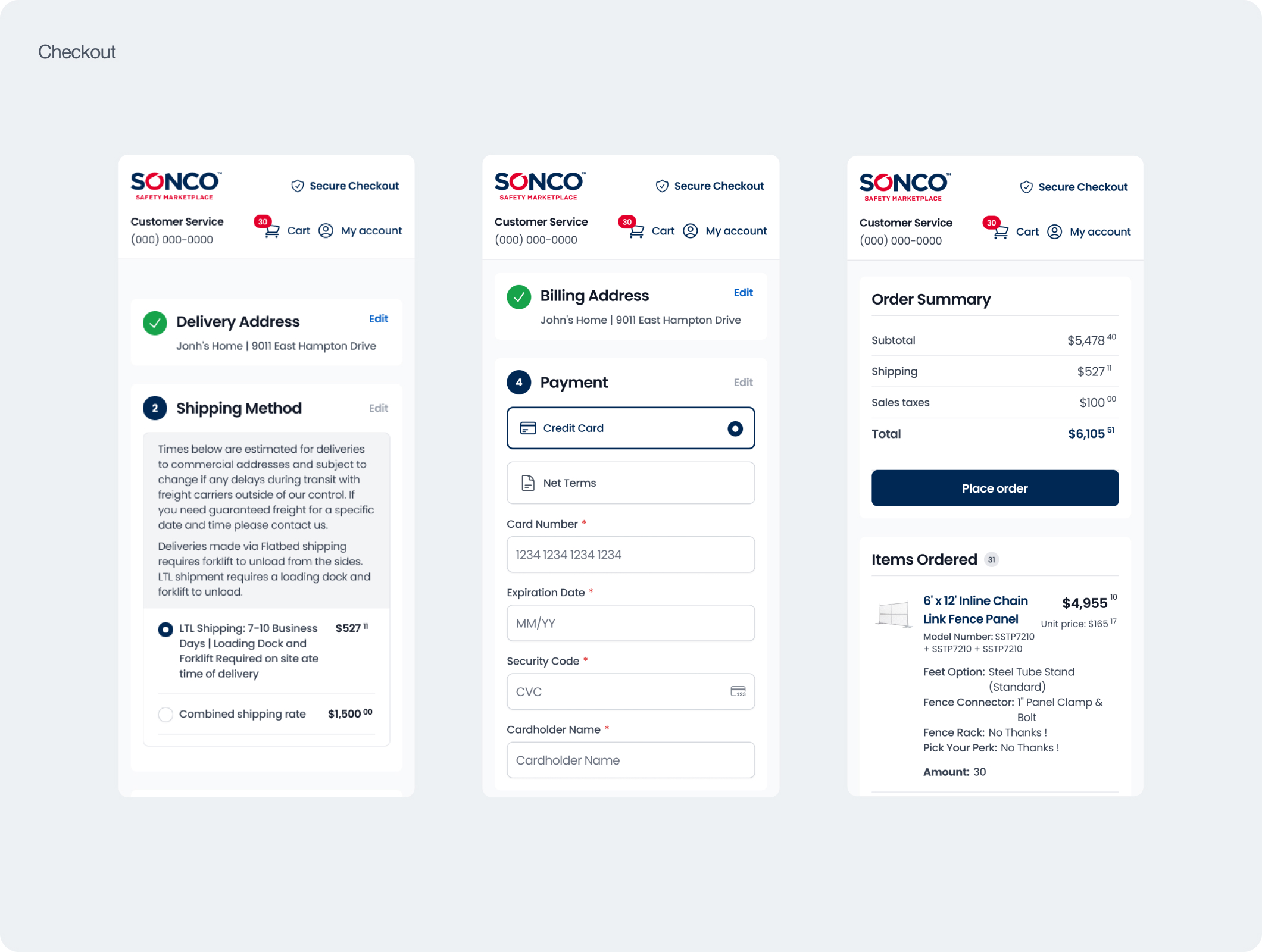
SONCO’s B2B buyers were abandoning checkout at 93% because they couldn’t quickly confirm the true total cost—especially shipping, which often exceeded product value. Shipping was hidden behind a login wall, and critical purchase information was spread across a 4-step flow. The challenge was to increase session-to-checkout conversion and reduce time to complete purchase, without increasing traffic spend.
Approach
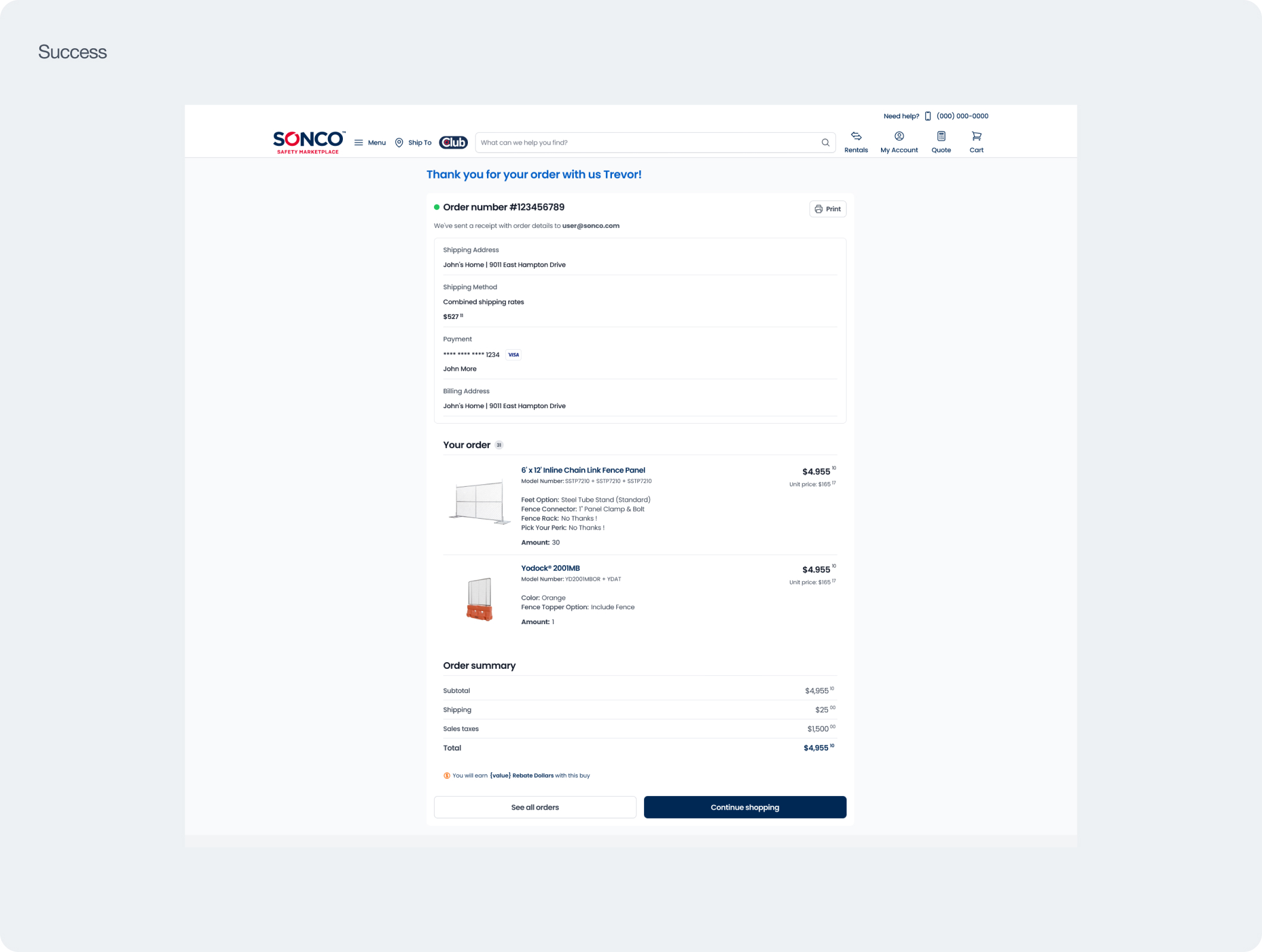
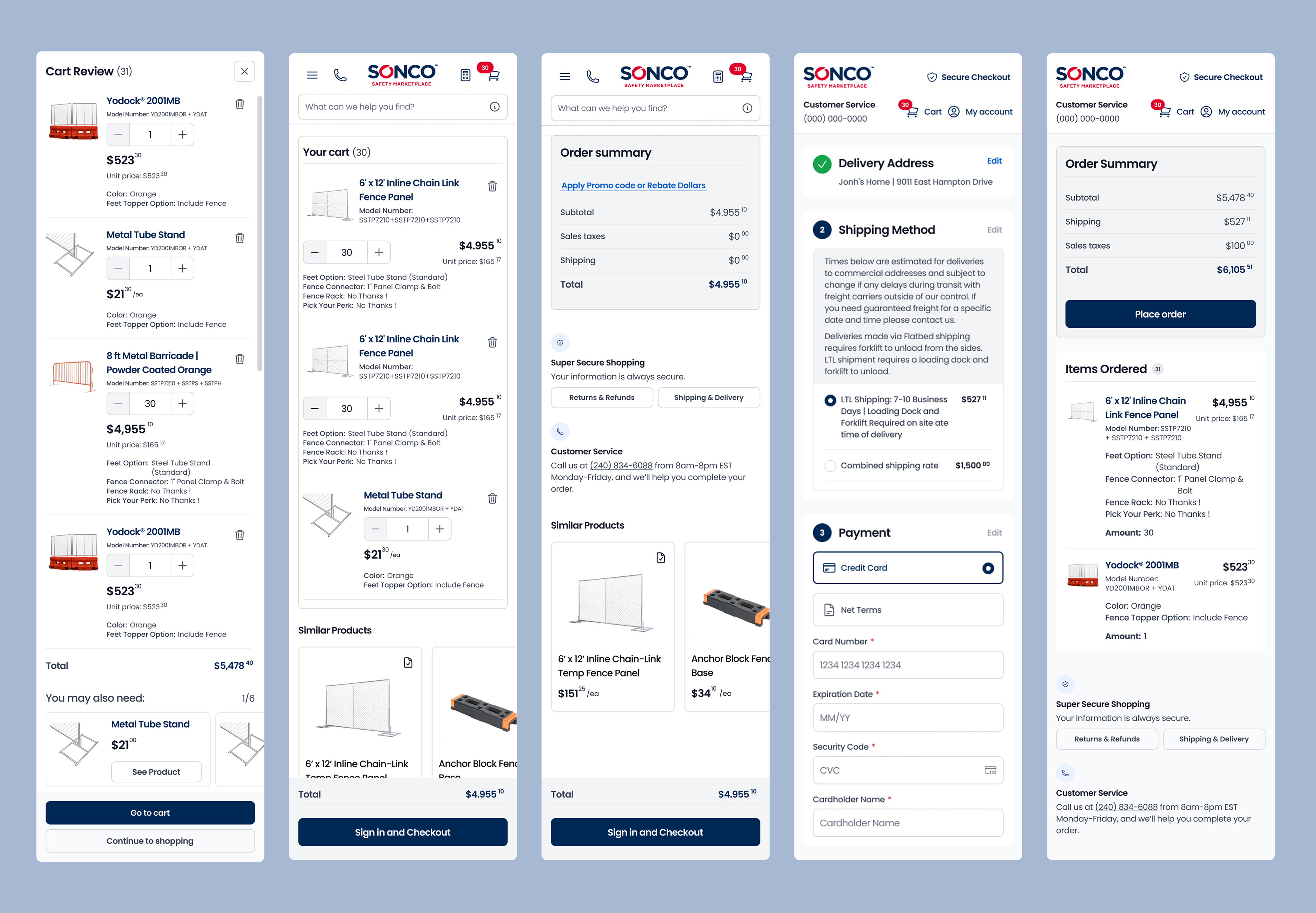
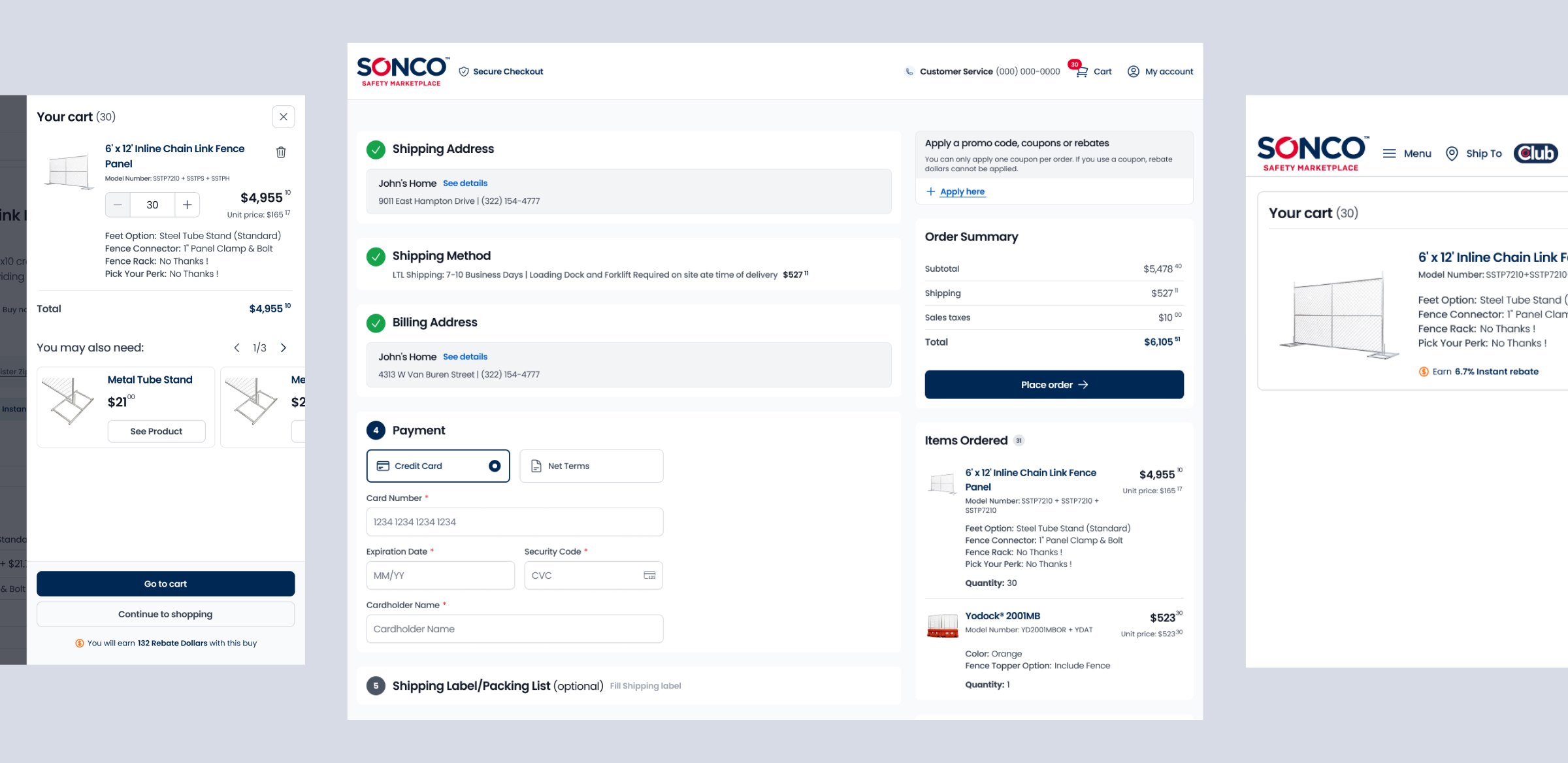
I led discovery and an evidence-driven UX audit using analytics + session recordings, then redesigned cart and checkout to remove unnecessary steps and make cost visibility immediate. We reduced the flow from 4 pages to 2 (cart + checkout), surfaced shipping before login, and introduced context-aware behavior (e.g., auto-advancing when only one shipping option exists).
Achievements
+37.5%
Convertion
-33%
Time to checkout
Company
SONCO is a US-based company that specializes in perimeter protection and safety barriers for construction sites, serving contractors and construction companies through their B2B e-commerce platform.
My Role
Staff Product Designer
Timeline
4 months
Year
2025
Scope
Research, Wireframes, UI Design
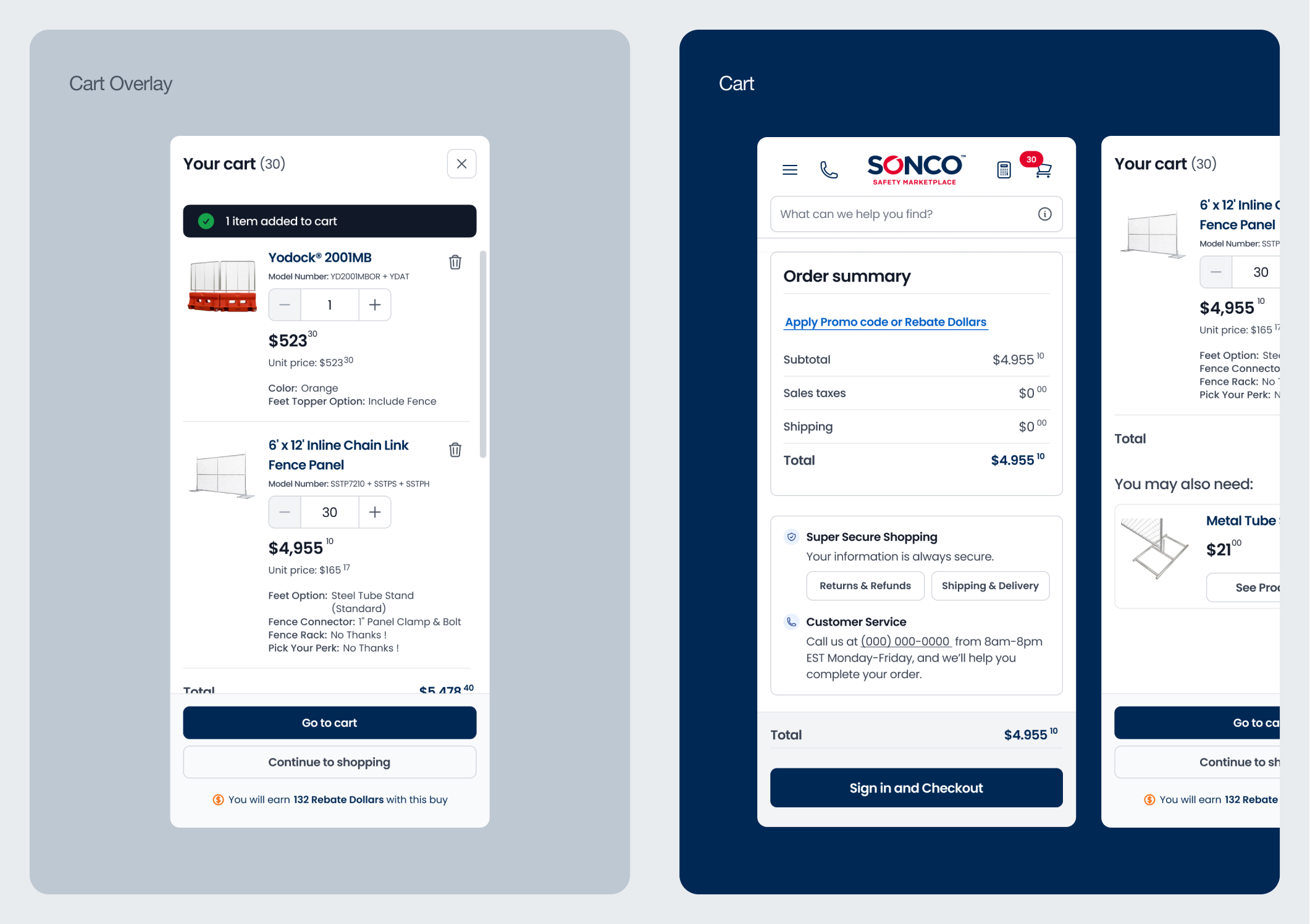
Funnels and session recordings showed drop-offs when buyers hit the login wall before seeing shipping and when the flow forced low-value decisions (like selecting the only shipping option)—a big issue for users who were price-checking and needed fast cost confirmation. In response, I surfaced shipping upfront, reduced the journey from four pages to two (cart + checkout), and added context-aware behavior (auto-advance when only one option exists); due to integration constraints and no budget for formal usability tests, ideas like Guest Checkout and Save for later were explored but deprioritized.
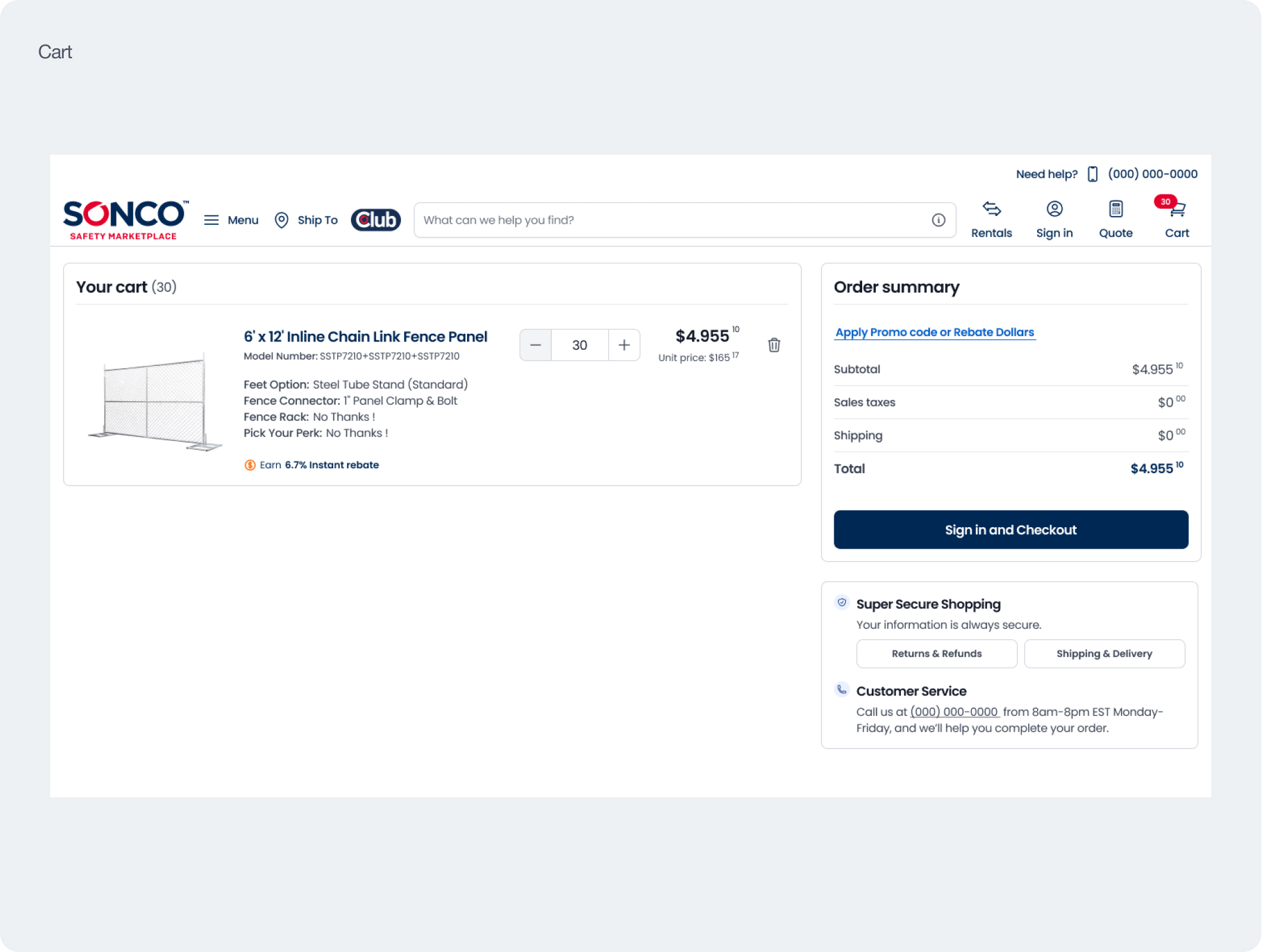
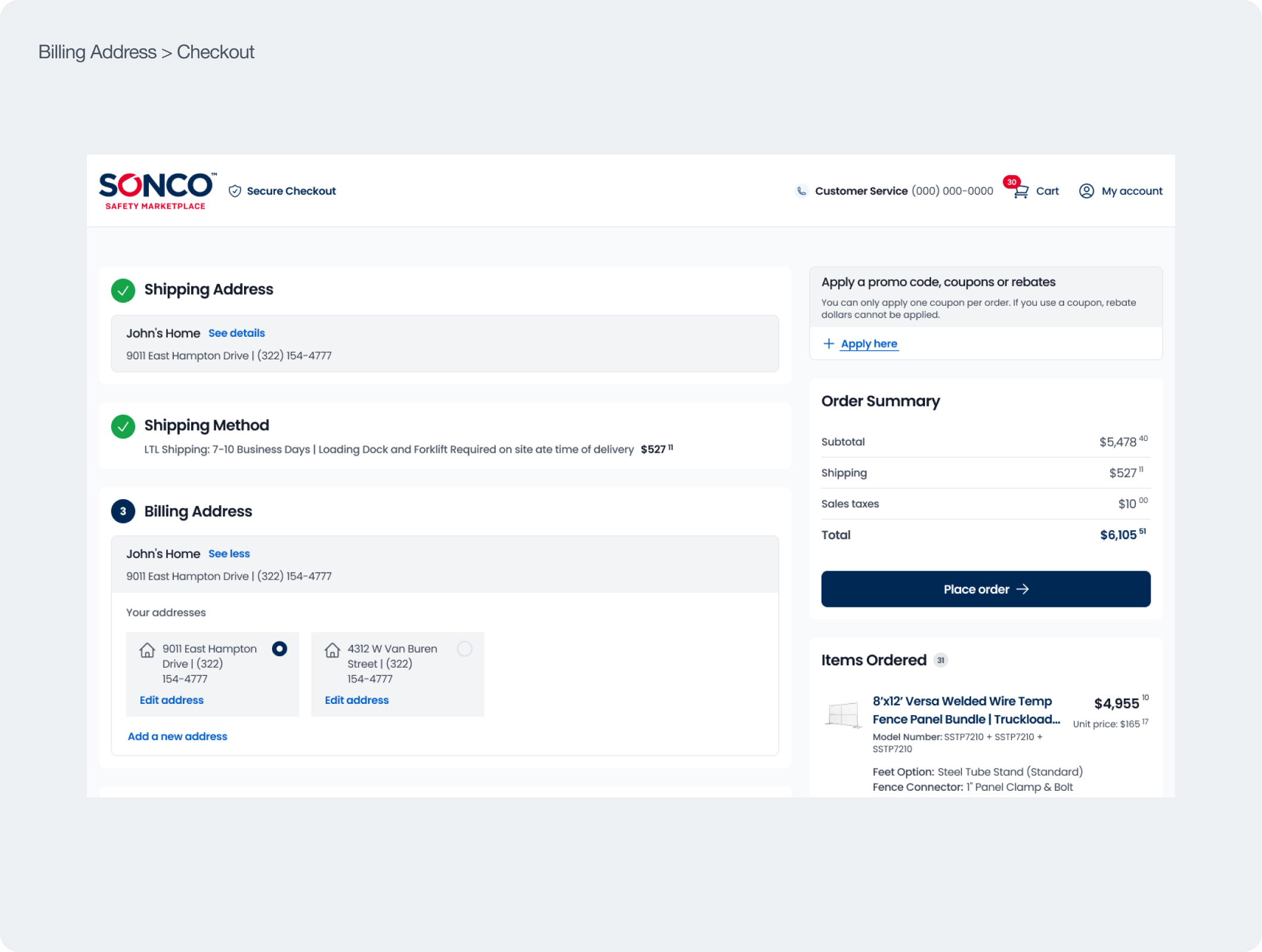
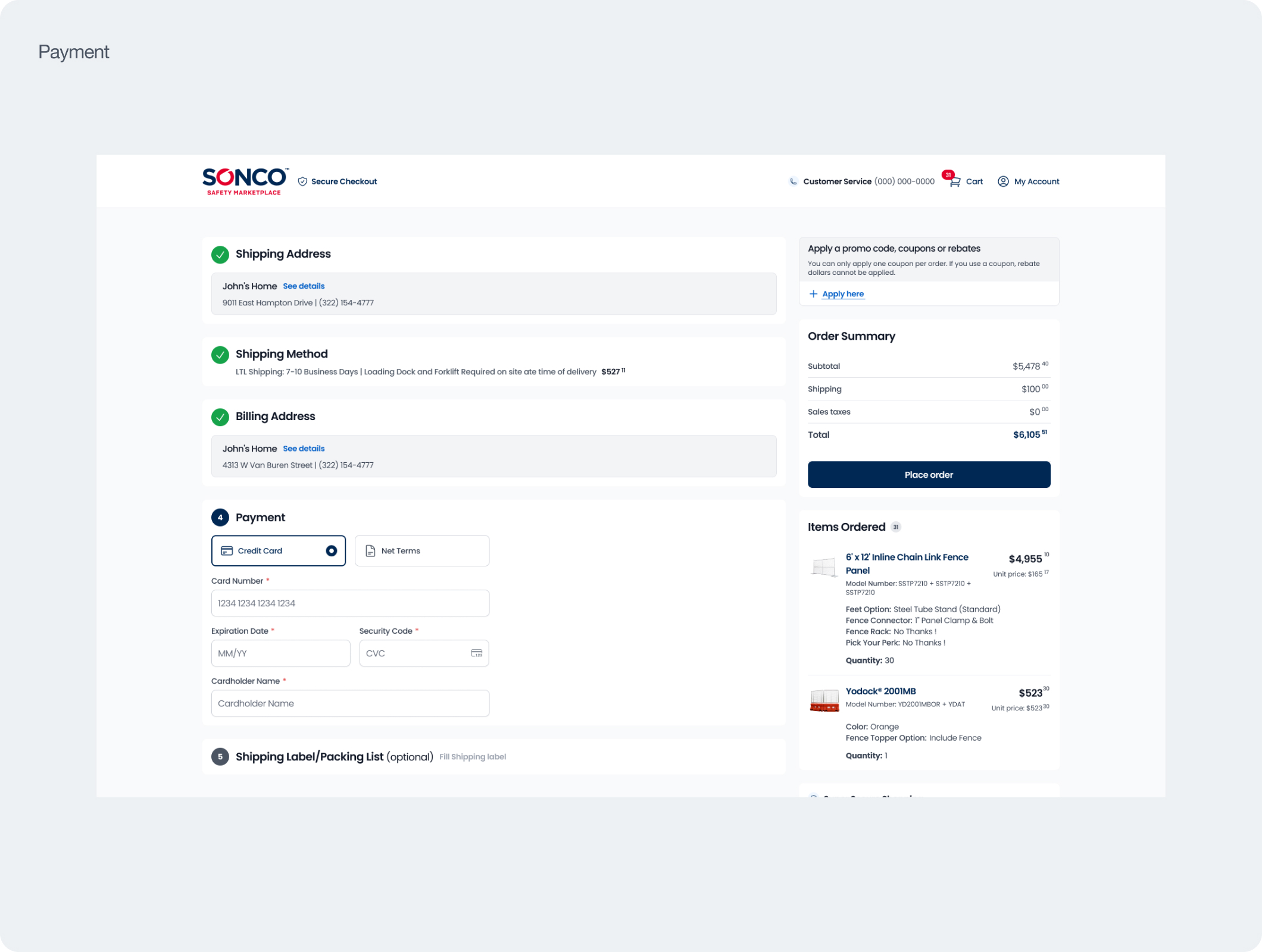
SONCO didn’t operate with Scrum squads, so I kept weekly check-ins through delivery, validating one flow at a time with engineering, content, and QA to maintain quality.
The rollout delivered a 37.5% conversion lift (0.8% → 1.1%) and a 33% faster checkout completion within six months, and it also exposed shipping-calculation limitations that triggered a follow-up initiative to improve the shipping tool.